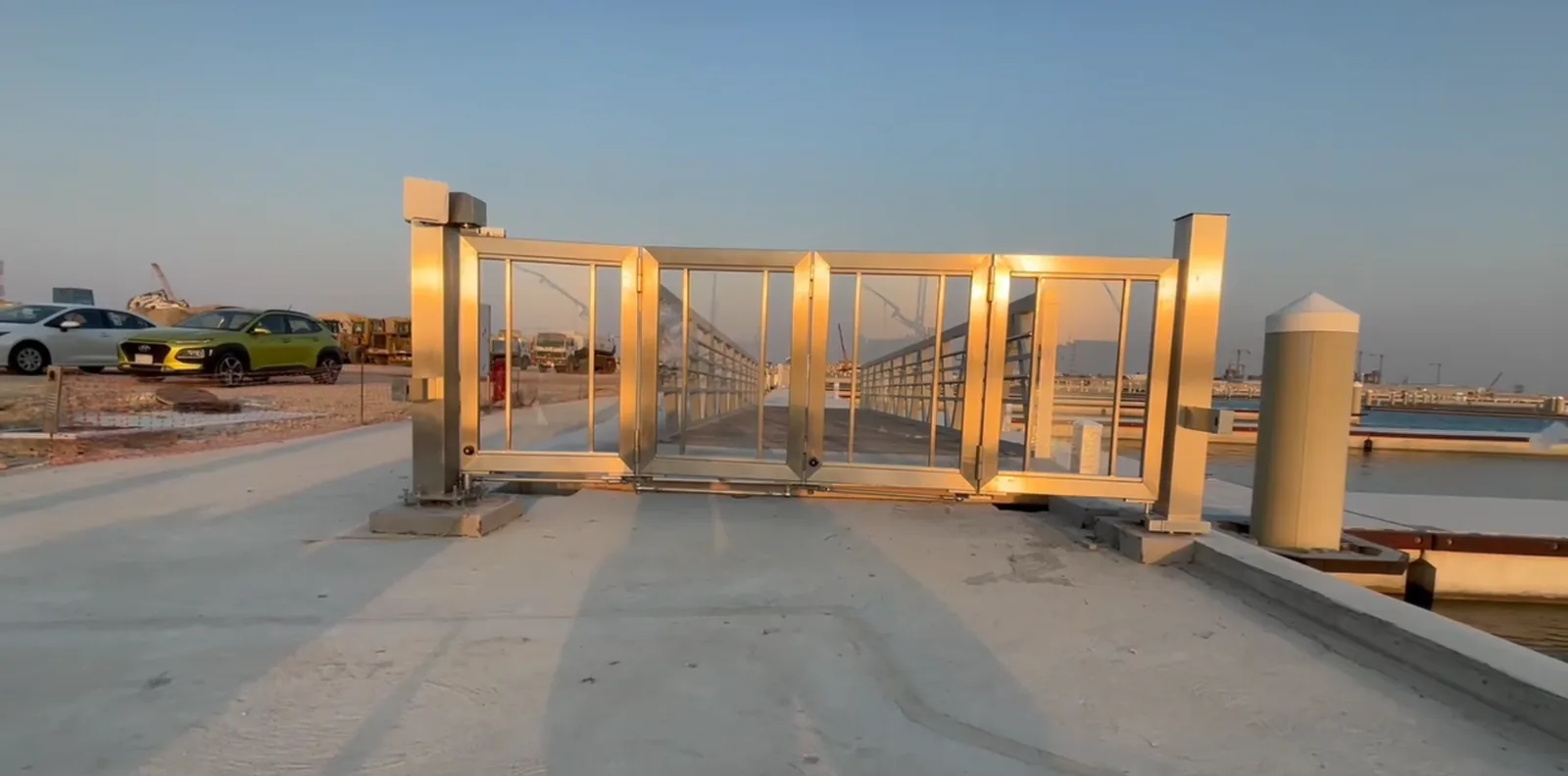
Stainless steel and glass folding gate
SS316 frames, laminated safety glass and a concealed motor for marinas, waterfront villas and showcase entrances.
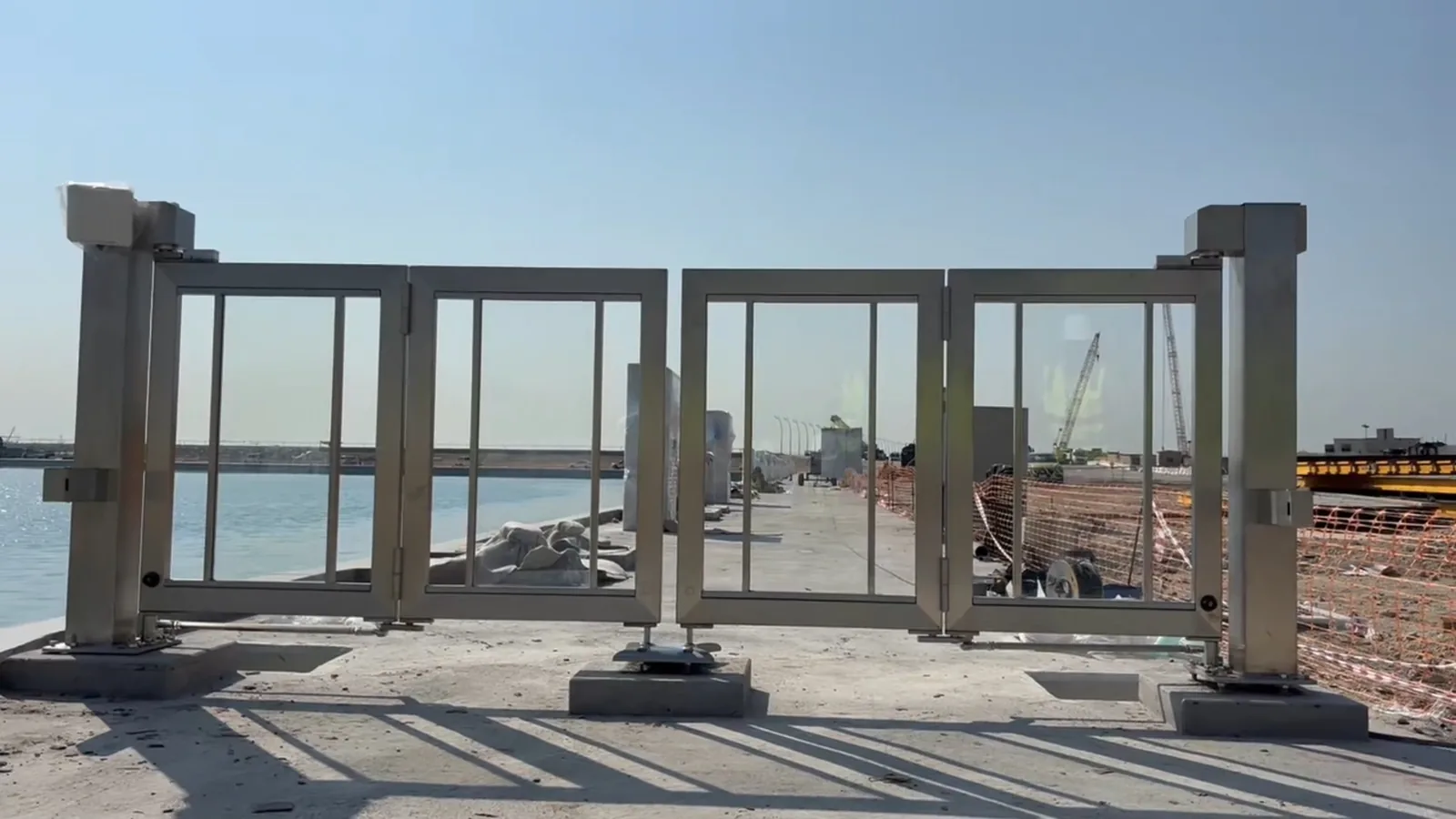
Built for salt air
Frame
SS316 stainless
2-3% molybdenum for chloride resistance
Glass
6 + 0.76 PVB + 6 mm
About 12.76 mm laminated tempered
Glass standards
EN 14449, ANSI Z97.1
GB 15763.3; EN 12600 impact
Glass range
-40 to +120 °C
Light transmission ≥ 85%
Motor
DC 24 V, 150-200 W
In-column, concealed
Torque
Up to 500 N
15-25 s per 90°
Motor rating
IP52
-25 to +45 °C
RFID
860-960 MHz
8-10 m range, <10 ms
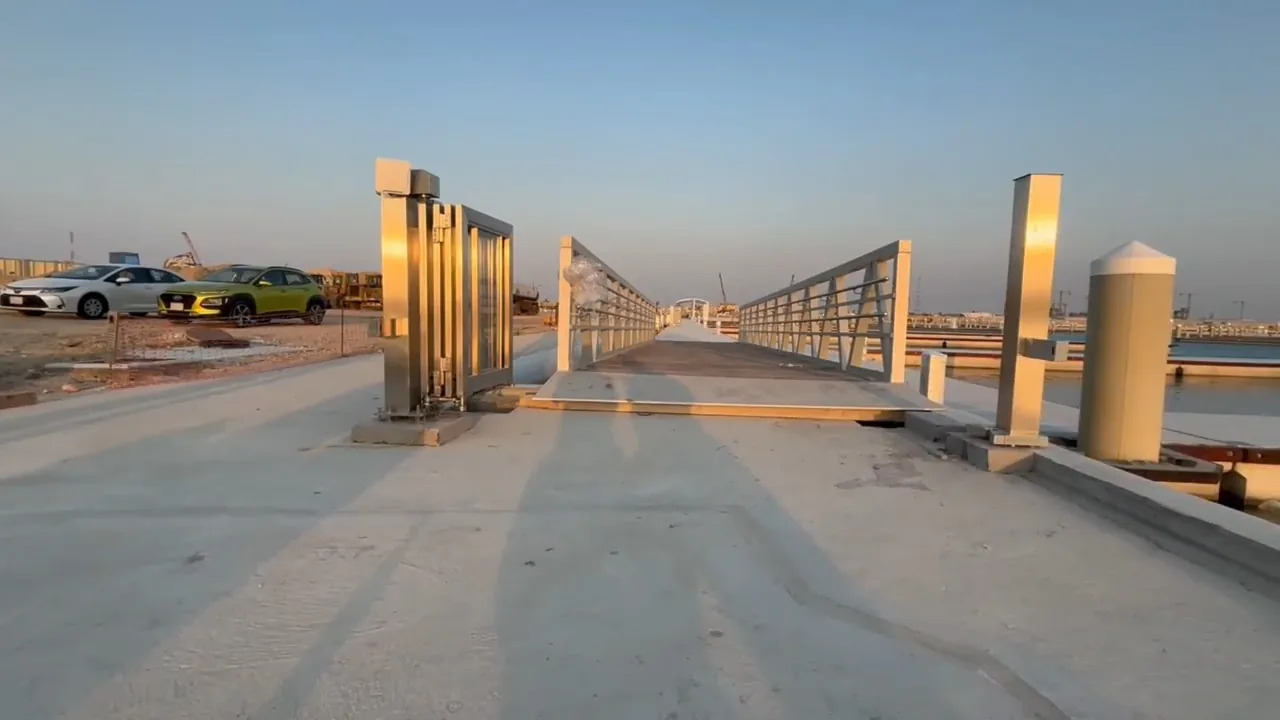
Clear views, safe panels
Laminated glass keeps the view to the water open. If a pane is ever broken, fragments stay bonded to the PVB layer instead of falling.
The motor sits inside the column, so the gate keeps clean lines with no external arms.
Overview
The Stainless Steel & Glass Folding Gate isn't something you'll find in a catalog. We build it to order. Its frame and hardware are SS316 stainless, the panels are laminated tempered glass, and the drive sits out of sight inside the column. It folds to the side like our aluminum bifolds, but it reads as part of the building, not as a fence.
One job started it. A high-end marina contractor on Saudi Arabia's Red Sea coast wanted an entrance that could take salt spray all day and still look like glass, so we designed one from scratch (the story is at Red Sea marina). New orders start from that same specification. Then each one gets sized and detailed for its own opening.
Right for every driveway? No. Pick it when the view matters and corrosion is a daily fact of life.
Key features
SS316 structure and hardware
Frame, fixings, hardware: all SS316. That grade carries roughly 2 to 3% molybdenum, and the molybdenum is what fights chloride pitting. The Nickel Institute's guidelines for building exteriors say Type 316 is preferable for coastal regions and polluted atmospheres. On a seafront site like the marina, 316 is the usual choice.
12.76 mm laminated tempered glass
Panels are 6 mm + 0.76 mm PVB + 6 mm, so about 12.76 mm all in. They're specified to EN 14449 and ANSI Z97.1, with EN 12600 impact classification. The glass is rated from -40 to +120 °C and lets 85% or more of the light through. Crack a pane and the PVB interlayer keeps the pieces where they are.
Motor hidden in the column
You won't see the drive. It's a DC 24V motor tucked inside the column, 150 to 200 W, under 3 A, with 500 N maximum torque. Expect 15 to 25 seconds for a 90° fold. It carries an IP52 rating and works from -25 to +45 °C. Nothing bolts onto the glass, and there's no motor box parked beside the post.
Long-range RFID entry
Members' and residents' cars open the gate with long-range RFID (860 to 960 MHz), read at 8 to 10 m in under 10 ms. Nobody stops to lean out at a reader. Prefer something else? Our control system also takes LPR, keypad, app and intercom inputs.
Folds like our aluminum bifolds
It folds to the side, like a bifold. Hinge and guidance details depend on leaf size, so ask us which system suits yours. Curious how a folding leaf carries its load to the ground? Our technology page walks through it.
Where it fits
Salt, sun and looks all count here. These are the sites where it earns its place:
- Marinas and yacht clubs. The Red Sea gate runs 24/7, unattended. After long-term operation on that coast, its SS316 parts and electrics were recorded free from corrosion or oxidation.
- Waterfront villas and resorts. Say your drive looks straight out to sea. Glass keeps that view, while steel bars would slice it into strips.
- Hotel and residence forecourts, where the entrance is really part of the facade.
- Short, tight openings. No room for a swing arc or a long sliding run? The panels fold off to the side. Ask us whether your opening can use a suspended, trackless layout like our aluminum bifolds.
Running a logistics yard with heavy traffic? Go with the industrial folding gate. A forklift lane is no place for a glass face.
How to specify it
Each unit is engineered to order. Before anything gets cut, we run structural verification and load analysis on your size. You'll get CAD drawings and renderings to approve, and building starts only after you sign off. From drawing approval, production typically takes 15 to 20 days.
Want the quote moving fast? Send us these:
- Clear opening width, gate height and the column space on each side
- How far you are from the shoreline, and whether spray or pool chlorine reaches the gate
- The glass look you'd like (clear, tinted or patterned) and any finish requirements
- Access method: RFID, LPR, keypad, app or intercom
- Power at the posts and roughly how many cycles a day
- Site photos, including the ground at both posts
| Question | SS316 & glass | Aluminum bifold |
|---|---|---|
| Main concern is salt or chlorine | Best fit | Works with powder coat care |
| View through the gate matters | Yes | Partial, depends on infill |
| Fast opening for busy traffic | 15 to 25 s per fold | 6 to 12 s |
| Fully exposed to heavy rain | Check IP52 drive placement | Confirm drainage and drive position at the drawing stage |
Here's the honest part. IP52 on the motor suits a covered or semi-sheltered column. If your gate will take driving rain head on, tell us, and we'll confirm whether the drive position needs extra protection. Gates ship in full wooden crates. Our engineers guide installation and commissioning on site. Start at contact.
Sources
- Stainless Steel in Architecture, Building and Construction: Guidelines for Building Exteriors (Nickel Institute)
- Stainless Steel in Architecture, Building and Construction: Guidelines for Maintenance and Cleaning (Nickel Institute)
Product figures come from CAIMEN product documentation.
Stainless Steel & Glass Folding Gate questions
Why SS316 instead of 304 stainless?
Molybdenum. SS316 has roughly 2 to 3% of it, and that's what improves resistance to chloride pitting from sea spray and pool water. On a waterfront site, 304 tends to show the difference as tea staining and pitting. The Nickel Institute's exterior guidelines recommend molybdenum grades for coastal exposure, and 316 is what went into the Red Sea marina gate.
Is the glass safe if it breaks?
Each panel is 6 mm + 0.76 mm PVB + 6 mm laminated tempered glass, specified to EN 14449 and ANSI Z97.1 with EN 12600 impact classification. Tempered glass breaks into small pieces. The PVB layer keeps them bonded, so the panel stays in its frame instead of falling out.
How fast does it open?
Plan on 15 to 25 seconds for each leaf's 90-degree fold, driven by the concealed DC 24V motor in the column. Our aluminum bifolds are quicker, at 6 to 12 seconds. So this one's better for marinas, villas and hotels than for a busy commercial entrance where cars queue.
How do I clean and care for it?
Rinse salt off the steel and glass with fresh water on a regular schedule. Near spray, do it more often. A mild detergent and a soft wipe handle the rest. According to the Nickel Institute's maintenance guide, regular washing is what keeps stainless looking clean, especially in sheltered spots where rain can't do the job for you.
Designing a waterfront entrance?
Send drawings or photos. We will propose materials for your exposure level.
Or email [email protected]